
My freshman year of college I spent a month in China learning Mandarin and getting acquainted with Chinese culture. I compiled a list of travel tips that you might find helpful while planning your first trip to China.
I don't gatekeep good travel finds — I only share places and resources I genuinely use and love. This post may feature affiliate links, which means I may earn a small commission if you make a purchase at no extra cost to you. It helps me keep creating free travel resources on Curious Wanderess. Thank you for supporting my work, the occasional glass of wine, and Loki’s snack fund.
Tips for preparing to travel to China
Get a visa – and figure out what tourist visa you need
Make sure you visit a Chinese consulate ahead of time and get a tourist visa. If you’re planning to leave mainland China and come back, make you sure you get a double or multiple-entry tourist visa. For instance, if you’re in southern China and want to go to Hong Kong and come back to mainland China, you will need a double-entry visa because Hong Kong is not a part of mainland China, and you will, in fact, have to cross a border.
Learn a few Chinese phrases
Outside of bigger cities, you’ll find it difficult to communicate in English. Knowing a few words will be crucial in getting around. I found Chinese to be a difficult language to learn. There are different tones, and depending on which tone you use to pronounce a word, it can mean something completely different.
Nonetheless, being able to know a few words helped me navigate everyday tasks such as ordering from menus in restaurants. You might visit restaurants with picture-style menus, and knowing words for different food types can help you ask a question about meat or vegetable types or request a bowl of rice to come with your meal. Other than that, knowing basic greetings as well as “please” and “thank you” is always helpful.
Learn to use chopsticks
Most places won’t have western style silverware, so prepare to learn this new skill if you want to eat. Sometimes you just need to ask for silverware, but the likelihood that it will be available is rather low, especially in remote places outside of bigger cities.
Don’t panic if you didn’t have time to practice using chopsticks. I was taken by surprise, and everyone was willing to teach me on the spot. You’ll be fine. Do not steal the chopsticks from a restaurant – there were literally signs in the restaurants warning about this, and in any case, you can easily purchase chopsticks almost anywhere if you want a set of your own.
Pack tissues and hand sanitizer for squat-style bathrooms
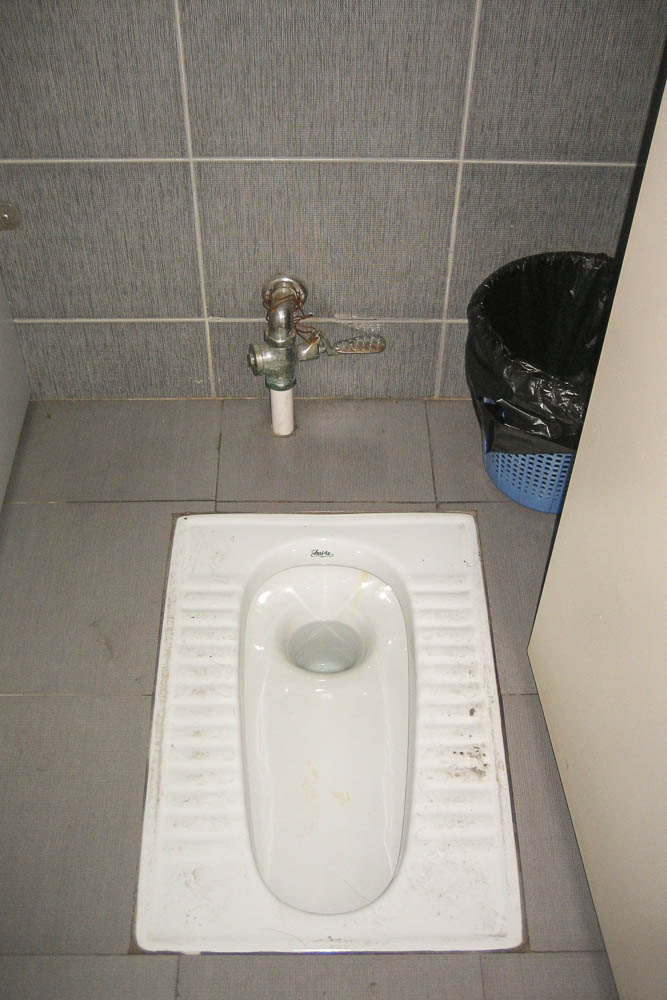
Most Chinese bathrooms are squat-style bathrooms. If you’re visiting touristy attractions, you might have access to western-style bathrooms, but this will not always be the case.
Chinese plumbing system does not take toilet paper, and you will not find toilet paper in the bathrooms. Instead, you will find a trash can to dispose of anything that doesn’t go down the drain. You will probably want to always carry tissues with you.
Additionally, not all bathrooms will have soap, so hand sanitizer will be your friend. You might find hand sanitizer difficult to locate in China, so bring some with you. I took one small carry-on-size container that lasted me and my classmates the whole month.
Prepare for the climate
I happened to be visiting China between May and June, which is the rainy season in the south of China. I found that there was not a day I would not need an umbrella. There are also lots of mosquitoes, so make sure you bring insect repellent. Beijing, on the other hand, was dry and hot with occasional rain. You will experience different weather depending on the region of China you visit. It is a huge country, after all.

Travel tips for life out and about in China
Bargain, bargain, bargain
Bargaining is a part of Chinese culture, so make sure that you always bargain anywhere outside of big department stores. Bargaining is part of the culture, and you need to respect that. You should at least cut the price in half and bargain on top of that. With a lack of fluent Chinese vocabulary, I found myself using merchants’ calculators or notepads to draw numbers that I was willing to pay. Sometimes, if you give a price that is too low and start walking away, merchants might agree to lower the price.
I never visited any shopping malls, only shopped from street vendors, where you can buy cheaply. Note, however, that the more you pay for goods, the better the quality. This might be especially important if you’re looking to buy high-quality souvenirs and gifts for family and friends. Some of the gifts I brought back were Chinese scrolls with beautiful scenery, a tea set, and tea. You’ll also find that most stores are open late, some until 11 p.m.
Beware that traffic rules are not mandatory
You’ll notice quickly that cars won’t stop for you. Chinese drivers are bad at obeying traffic rules. I should rather say that traffic rules are not mandatory in China. Be very cautious.
Expect to stand out
Unless you look Chinese, you have a high chance of becoming a tourist attraction, especially if you visually stand out, such as by skin color. People will stare at you and whisper something to themselves on many occasions. Often, you’ll be asked to take a picture with locals at tourist attractions.
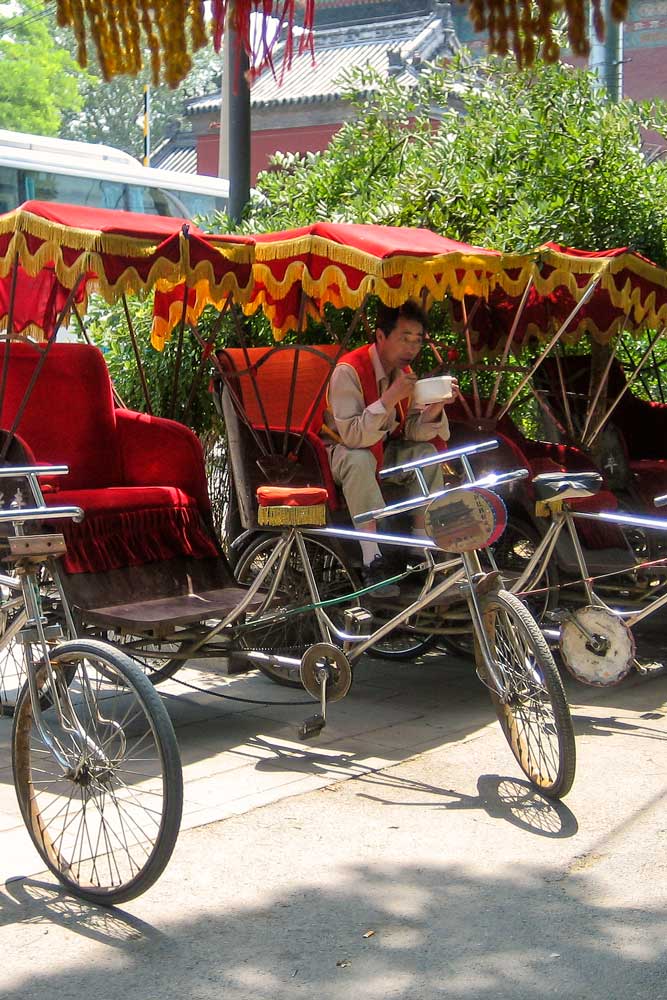
Not only will you become a tourist attraction and understand what it means to stand out in touristy spots, but you’ll also have people following you around trying to sell you stuff if you show any interest. Some of the merchants even followed me around while taking a rikshaw ride in Beijing, attempting to sell me chopsticks. Don’t show interest if you have none, just politely say ‘no’ and keep going. Remember, they are just trying to make a living.

Travel tips for eating in China
Boil water before drinking
Tap water in China is not drinkable. Make sure you always boil water before drinking. If you go to a restaurant and ask for water, you will get a glass of hot water – not ideal on a hot day. If you’re looking for a cold beverage, beer and soft drinks are your other alternatives.
Discover real Chinese food
I was amazed at the variety of foods available in China. I got to try some fruit I’d never seen before, such as durian and lychees. I didn’t want to experiment with eating insects or reptiles, but you might. The kind of Chinese food I had been accustomed to in the Western world are westernized version of Chinese food. In China, your food will mostly come with different parts of animal anatomy, such as fish bones or chicken legs and heads. Your food might stare at you – no kidding!
If you’re craving Western food, there are fast food chains and restaurants. However, you might discover that the food tastes a bit different than what you are accustomed to eating back home, even though you are eating at the same familiar chain, and some western-style restaurants might be quite pricy.
Drink tea
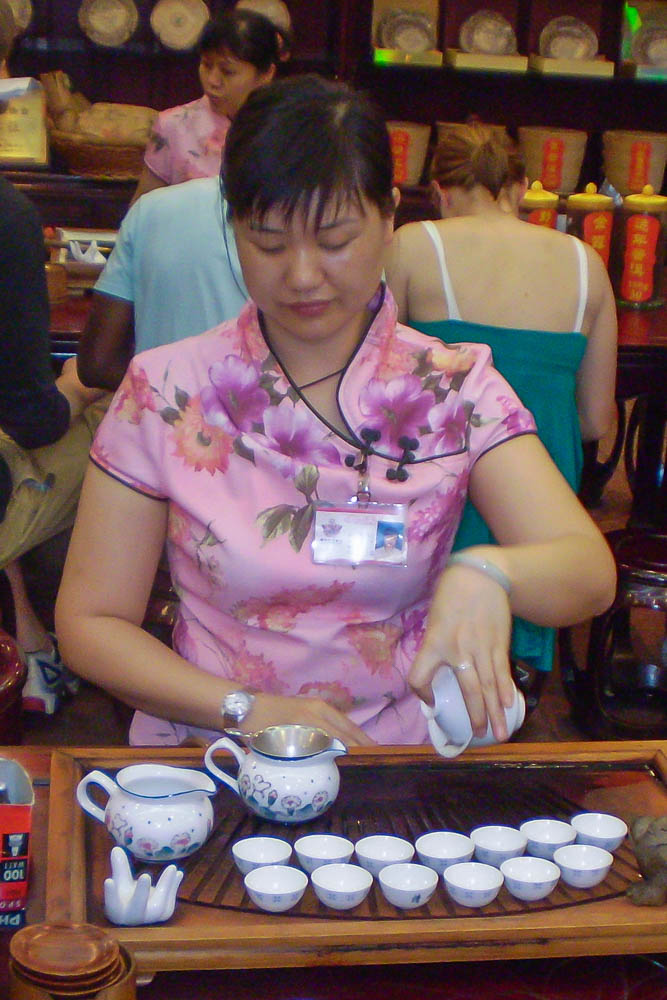
Chinese people drink a lot of tea. Jasmine or green teas are top choices. If you, your friends, or family are tea drinkers, tea or a teapot will make a great gift.
Tea is served with every meal. The first pitcher of tea you get in restaurants is for you to wash your dishes. You will be handed a pitcher of tea and a bowl to wash your dishes at the table. Then you get a second pitcher of tea to drink. Note: I only engaged in this ritual at smaller restaurants away from the touristy spots.
Expect some restaurants to look like a zoo
Don’t be surprised if certain restaurants you visit look like a zoo. You will come in, and there will be cages with live animals, reptiles, and insects, and aquariums with live fish and lobsters. You will see all kinds of animals there. The idea is to show you that the food is served fresh.
Experience family-style restaurants
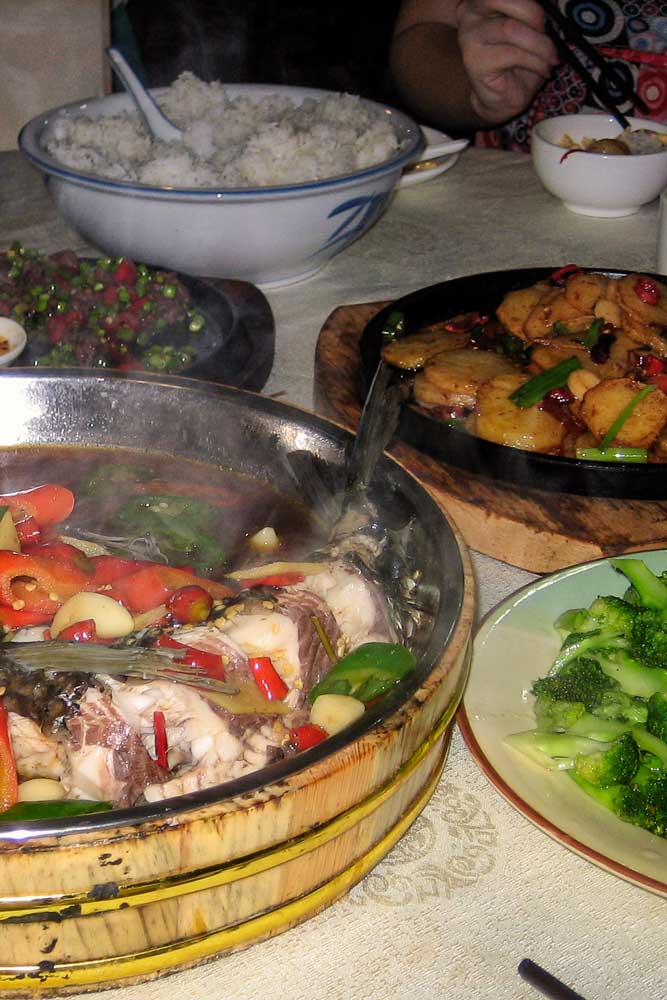
I found eating at Chinese restaurants quite cheap, comparable to what I would pay for fast food back in the U.S. Chinese food is served family style on a round table. A typical Chinese meal consists of various meat and vegetable dishes that are shared with the whole table. Everyone gets a bowl of rice and picks up food from shared plates with chopsticks. Desserts are not very common in China and typically consist of a fruit such as watermelon. Also, smoking cigarettes in restaurants is quite common.
I hope you’ll find these travel tips for visiting China useful. Happy exploring!




No comments